 ChatGPT
 Perplexity
 Claude

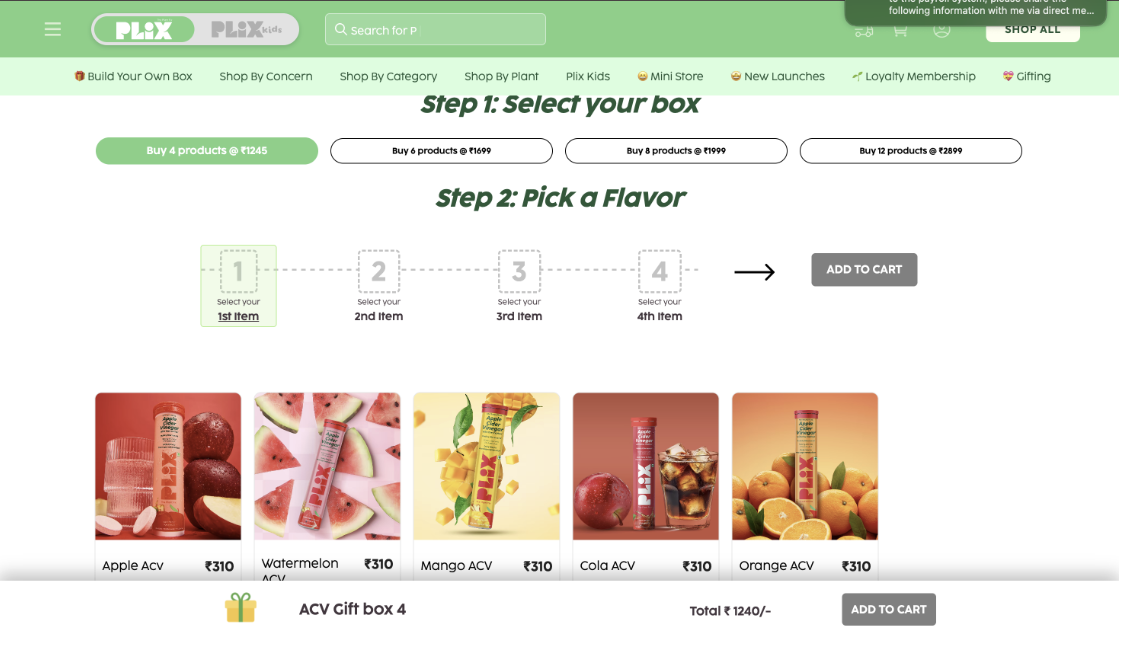
Most growth problems aren’t about demand or pricing. They’re about the decisions customers are forced to make. This week, we break down how rethinking choice, not discounts, unlocked higher-value ACV purchases for Plix.
News
Several mid-to-large D2C brands are publicly reporting reduced dependence on Meta & Google ads, with increased focus on apps, WhatsApp, email, and loyalty-driven repeat purchases.
Signal
Customer acquisition is getting riskier and more expensive. Brands don’t want growth tied to volatile ad platforms anymore.
Why It Matters
Retention-first systems (apps, wallets, loyalty infrastructure) are no longer “nice to have.” They’re becoming the primary growth engine — especially for brands that want predictable revenue and better margins.
News
Consumer behavior data shows diminishing returns on flat discounts (10%, 15%, 20%), especially in supplements, beauty, and lifestyle categories.
Signal
Shoppers are becoming immune to generic offers. Discounts are no longer exciting, they’re expected.
Why It Matters
Brands need smarter incentive mechanisms that feel valuable without eroding margins. Systems like wallets, credits, and conditional rewards outperform blunt coupons.
News
D2C brands with strong app adoption are seeing higher repeat purchase rates and stronger AOV compared to web-only users.
Signal
Apps aren’t just a channel, they’re a controlled environment where brands can influence behavior with nudges, reminders, and personalized logic.
Why It Matters
When brands own the interface, they can engineer buying behavior, from timing to cart size to redemption rules. This is where retention systems compound.
News
Brands are moving away from plug-and-play loyalty apps toward custom-built retention layers integrated into checkout, wallets, and post-purchase flows.
Signal
“Loyalty” is no longer a marketing gimmick, it’s becoming a backend decision tied to unit economics.
Why It Matters
The brands winning in 2026 aren’t offering more rewards, they’re offering better-designed incentives that protect margins while increasing LTV.
The theory is simple: customers want flexibility.
But what does that look like when applied to a real, high-volume product?
Apple Cider Vinegar was already selling well for Plix.
The problem wasn’t demand.
It was how multi-unit purchases worked.
When customers bought ACV in higher quantities :
4, 8, 12 tubes, they were forced into one single flavour.
Same taste, same experience, same fatigue.
That friction quietly capped:
So we didn’t ask, “How do we sell more ACV?”
We asked:
Why should a customer commit to 6 of the same flavour?
ACV is a daily-consumption product.
Daily products need:
Bulk buying removed all three.
People wanted quantity, they just didn’t want monotony.
Instead of forcing quantity tiers by flavour,
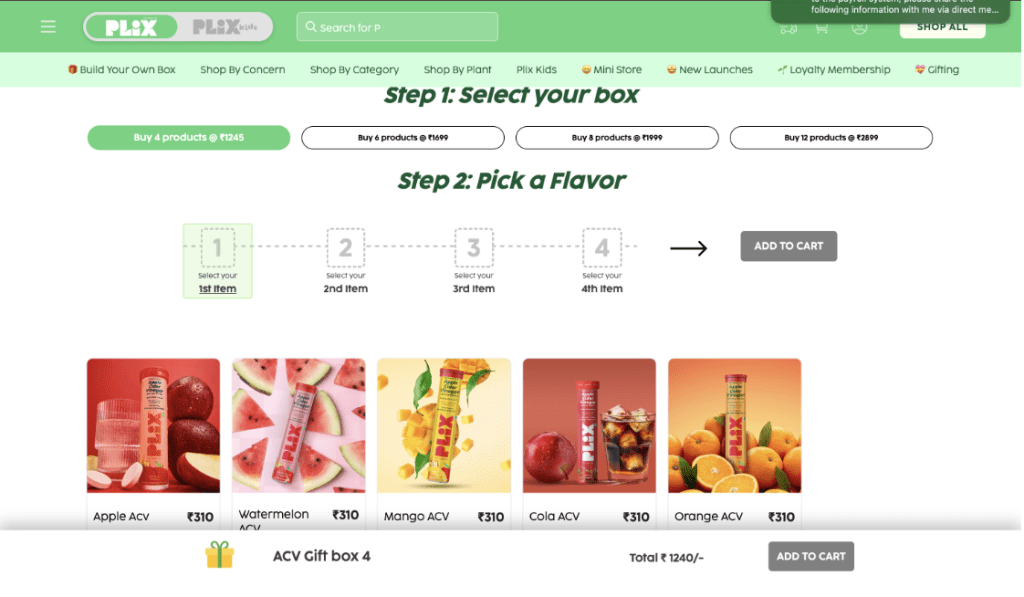
we rebuilt the logic around mix & match.
BYOB allowed customers to:
Same price logic.
Completely different experience.
Customers could now:
One box.
Multiple flavours.
Zero regret.
BYOB turned bulk buying into:
Customers could test new flavours without sacrificing value.
When choice increases:
People trust what they’ve personally curated.
Even loyal users get bored.
BYOB respected:
Habits survive on variation, not repetition.
Mixing flavours:
Earlier, bulk meant compromise.
Now, bulk meant freedom.
Customers didn’t feel like they were buying more.
They felt like they were buying smarter.
BYOB unlocked insights into:
This data later feeds:
The problem was never price.
It was forced sameness.
BYOB didn’t change the product.
It changed the choice architecture.
For Plix, that turned ACV bulk buying from a compromise
into a feature customers actually enjoyed.
That’s what building better looks like.
If you’re seeing drop-offs, capped AOVs, or repeat fatigue, the issue may not be your product, it may be your choice architecture.
We’re offering a free CRO + business analysis to identify where friction is silently limiting your growth.
Schedule your free strategy call and let’s build a system that scales smarter, not louder.
Also, read the following articles below:
Why Retention Is Winning in 2026?
The Gap Between Traffic and Trust
Growth & Retention



Comments are closed