ChatGPT ChatGPT Perplexity Perplexity Claude Claude

    

Award-winning Award Winning India's best ecommerce tech company

Trusted by Mamaearth, Cambay Tiger & PlixLife

Headless commerce development for ambitious D2C brands.

We build custom headless ecommerce stores — a fully bespoke, lightning-fast storefront powered by a rock-solid backend like Shopify. Total design freedom, no platform limits, conversions that scale.

5+Headless builds for leading brands
<5sTypical load time
30–82%Conversion lift range

How headless works

Custom FrontendBespoke, lightning-fast storefront — total design & UX freedom (React / Next.js / Hydrogen)
Shopify BackendProducts, inventory, orders & checkout — the reliable engine you already trust

Trusted by the world's leading D2C brands

Start here

What is headless & custom commerce?

The two terms get confused constantly. Here's the plain-English version — and why it matters for your store.

What is headless commerce?

Headless commerce is an architecture that separates your store's frontend (what shoppers see and click) from its backend (products, inventory, orders and checkout). The two layers talk to each other through APIs.

That means you can build a completely custom, blazing-fast storefront — without being trapped inside a theme — while keeping a proven backend like Shopify running quietly behind it.

In short: a custom storefront on the front, Shopify's reliability on the back.

What is custom commerce?

Custom commerce means building your ecommerce experience around your business — bespoke design, workflows and features — instead of forcing your business into a templated SaaS platform.

Headless is the most common way to deliver it: you escape design and checkout limits and add things off-the-shelf platforms simply can't do — hyperlocal delivery, subscriptions, complex loyalty, multi-warehouse logistics.

In short: software shaped to your business, not the other way around.

Headless vs traditional

How headless compares to a standard SaaS store

Both are valid. The right choice depends on where your brand is in its growth.

 Traditional / templated storeHeadless & custom commerce
Frontend designLimited to themes & plugins Fully custom, pixel-perfect
Site speedSlowed by plugin bloat Lightning fast — built for Core Web Vitals
Checkout & flowsLocked / restricted Full control over checkout & UX
Traffic at scaleStrains during spikes Handles 10x traffic comfortably
Custom featuresBound by app marketplace Any feature, any integration
Time to launchDays to weeks4–8 weeks (worth it)
Best forEarly-stage & testingScaling & established D2C brands
Why brands switch

The benefits of going headless

What you actually gain when you move beyond a templated store.

Lightning speed

Sub-5-second loads and strong Core Web Vitals — which lifts both conversions and SEO rankings.

🎨

Total design freedom

An app-like, on-brand experience with zero theme constraints — so you don't look like every other store.

🛒

Checkout & CRO control

Customise checkout, upsells and flows that locked SaaS platforms won't let you touch.

🧩

Any custom feature

Hyperlocal delivery, subscriptions, memberships, multi-warehouse logistics — built exactly your way.

📈

Scales with traffic

Architected to stay fast and stable through sale spikes and 10x growth.

🔌

Keep your backend

Stay on Shopify for products, inventory and orders — no risky re-platforming of what works.

Not sure if headless fits your store?

Get a free architecture review — we'll tell you straight, no hard sell.

Book a free consult →
Proven at scale

Built for India's leading D2C brands

Headless is hard. We've shipped it for brands most agencies can't.

10xTraffic capacity — Mamaearth
+30%Conversion in 7 days — PlixLife
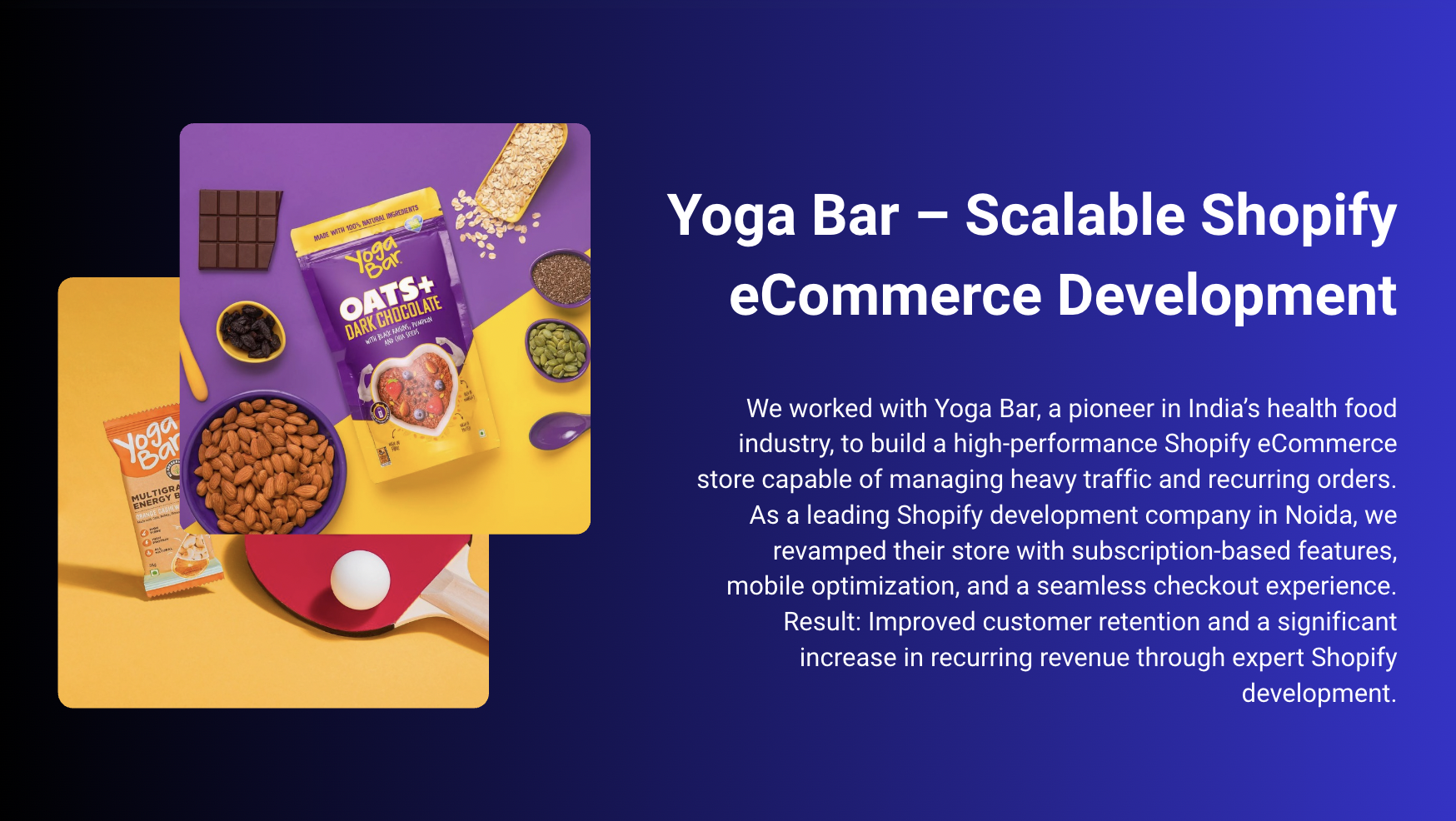
+82%Conversion improvement — Yogabar
<5sLoad times delivered
What we can build

Key features of custom headless solutions

1

Lightning-fast checkout

A seamless, optimised checkout built to cut drop-offs and boost conversions.

2

Multi-location inventory

Real-time stock sync across warehouses, dark stores and offline locations.

3

Membership, cashback & wallet

Tiered memberships, reward systems, cashback and wallet recharge to build loyalty.

4

App-exclusive drops

Product drops and flash sales visible only to app users — driving engagement and installs.

5

Personalised push

Targeted push notifications for offers and arrivals, with engagement well above email.

6

Hyperlocal & B2B flows

Delivery zones, complex user roles and procurement workflows SaaS simply can't handle.

Testimonials

Loved by founders & growth teams

We specialise in D2C ecommerce, Shopify and mobile app development — trusted by brands and growth teams to deliver results that compound.

Free, no obligation

Get a free headless architecture consult

Not sure if headless is right for you? Tell us about your store and we'll map out whether custom commerce makes sense — and what it would take.

  • A clear recommendation: headless, hybrid, or stay as you are
  • Where you're losing speed & conversions today
  • A realistic scope, timeline and what it costs
FAQ

Headless commerce — frequently asked questions

What is headless commerce in simple terms?
Headless commerce separates your store's frontend (the design shoppers interact with) from its backend (products, inventory, orders and checkout), connecting them via APIs. This lets you build a fully custom, fast storefront while keeping a reliable backend like Shopify.
What's the difference between headless and traditional ecommerce?
A traditional store ties the frontend and backend together inside one theme, so your design and checkout are limited by the platform. Headless decouples them, giving you complete design freedom, faster performance, and the ability to customise checkout and flows that locked platforms don't allow.
Is headless commerce good for SEO?
Yes. Headless storefronts are typically much faster, with stronger Core Web Vitals — a direct ranking and conversion factor. Built correctly (server-side rendering, clean markup, proper metadata), headless can outperform a plugin-heavy traditional store on SEO.
Do I have to leave Shopify to go headless?
No. The most common setup keeps Shopify as your backend for products, inventory, orders and checkout, while we build a custom frontend on top of it. You keep what works and remove only the design and performance limitations.
Which brands should choose headless commerce?
Scaling and established D2C brands that need speed at high traffic, a differentiated experience, or features SaaS can't support — like hyperlocal delivery, subscriptions, complex loyalty or multi-warehouse logistics. Early-stage brands testing the market are often better on a standard store first.
How long does a headless build take, and what does it cost?
Most headless projects go live in 4–8 weeks depending on scope and integrations. Cost varies with complexity — book a free architecture consult and we'll give you a realistic scope, timeline and quote for your specific store.

Ready to outgrow your templated store?

Let's build a custom headless storefront that's faster, fully yours, and engineered to convert. Free consult, no obligation.

Ready to Scale?

Get started today with Headless commerce and watch your Shopify store’s revenue soar!

Let’s take your brand to the next level with CRO-led design, custom development, and real tech that drives conversions.

E-commerce & Technology Update