ChatGPT
 Perplexity
 Claude

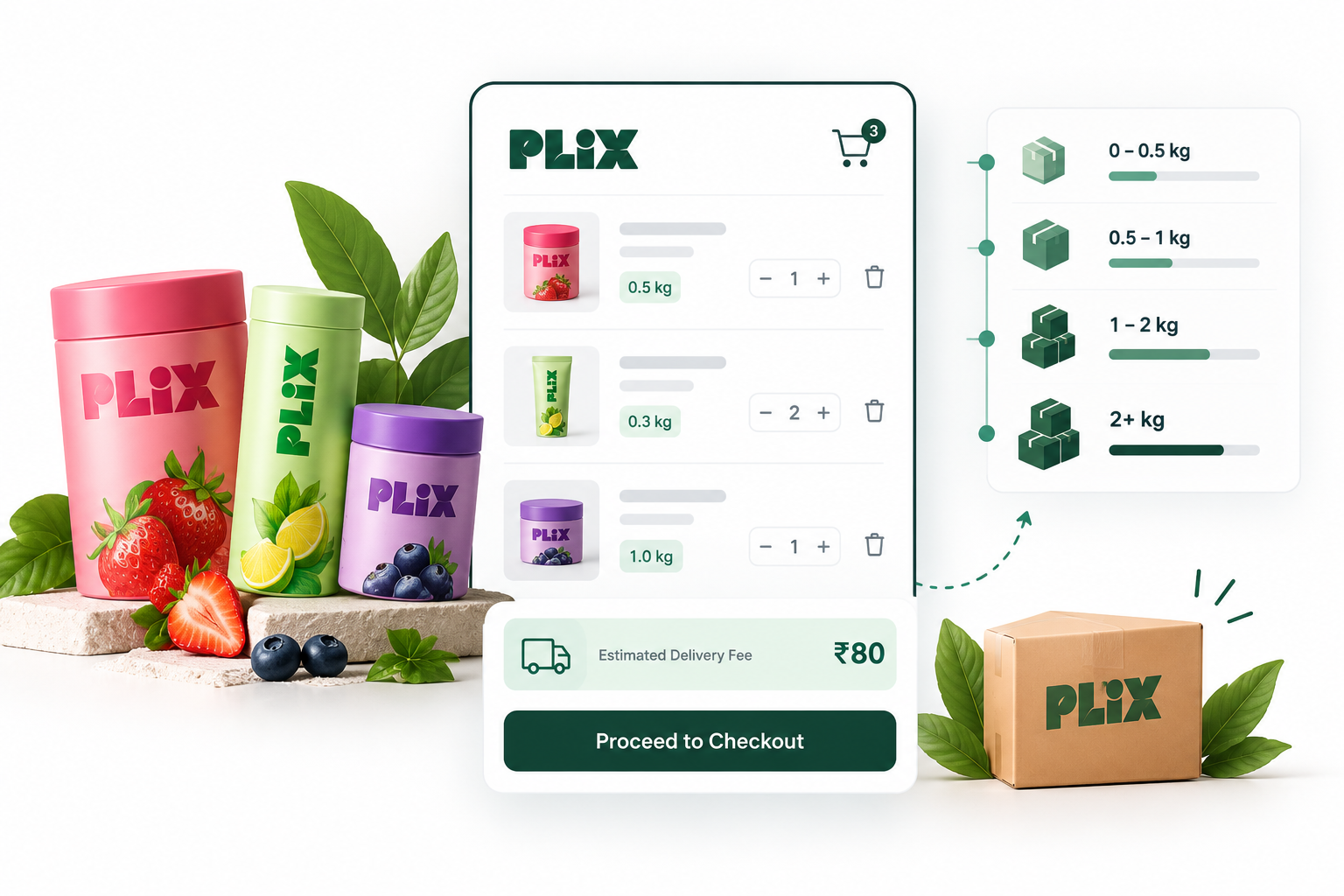
A product that weighs 500 grams shouldn’t necessarily cost the same to ship as one weighing 10 kg. Yet many ecommerce stores rely on fixed shipping rules that ignore product weight, membership benefits and cart value. The result? Brands either overcharge customers or quietly absorb costs that eat into margins.
Summarize this post in AI's:
D2C Market Pulse: Quick Hits
Parcel shipping costs are climbing: FreightWaves reported rising carrier rates and surcharges on October 14.
Signal: Delivery costs remain under pressure.
Why it matters: Incorrect shipping rules can turn profitable orders into expensive ones.
Shopify expands AI shopping access: Shopify opened its product catalogue to more AI agents.
Signal: Shopping journeys are evolving.
Why it matters: Product and checkout experiences need reliable underlying logic.
Indian D2C brands rethink growth: Founders at the Bharat D2C Conclave discussed AI-led advertising and omnichannel expansion.
Signal: Growth requires stronger operations.
Why it matters: Scaling needs systems that handle real business rules.
What We Built: Weight-Based Shipping
We built a flexible shipping system that calculates delivery charges based on product weight, cart value, and membership eligibility. Configurable weight ranges allow specific products to have different shipping rates, including a ₹99 charge for products within a defined weight band.
The system also supports cart-value thresholds and preserves existing membership benefits for eligible products, making shipping calculations more adaptable to different products and order combinations.
Decode
Shipping logic should reflect the actual order, not just a default fee. Audit weight, cart value, membership eligibility and mixed-product carts before changing rates.
The Takeaway
Better ecommerce engineering isn’t about adding complexity. It’s about making business rules work together.
More from Build Better
[AI Is Doing the Thinking. What Are We Doing?], [how AI is changing project management][shopify spring 26 edition][ai code review best practice], [your designer didn’t misunderstand you; your brief did]
Reach out directly:
Have a challenge you’re looking to solve? Let’s talk.
Frequently Asked Questions (FAQs)
Businesses can optimise shipping rates based on product weight, dimensions, delivery location, and cart value. Clear shipping policies and accurate checkout calculations help avoid unexpected charges while protecting profit margins.
Weight-based shipping calculates delivery charges according to the weight of an order or product. Businesses can define weight ranges and assign different shipping rates to each range based on their operational requirements.
Shopify stores can configure shipping rates using supported shipping settings and product weights. For more complex requirements, such as custom weight ranges or combined business rules, an appropriate shipping app or custom development may be needed.
Shipping costs directly affect order profitability. If businesses charge less than their actual delivery expenses, they may absorb the difference. Accurate shipping calculations help align customer charges with fulfilment costs.
Businesses can establish order-value thresholds to determine shipping charges. For example, they might offer free shipping above a specified cart value while charging a standard rate for smaller orders. The threshold should account for product margins and fulfilment expenses.
Yes, but the available configuration depends on the shipping rules and setup. Stores may need shipping profiles, compatible apps, or custom logic to handle weight-based rates and free-shipping thresholds together without conflicting rules.
Membership benefits can provide free or discounted shipping for eligible orders. Businesses should define how these benefits interact with product weight, cart value, and other shipping conditions so customers receive predictable charges.
Businesses should establish clear rules for mixed-product carts, including how product weights are combined and which shipping rate applies. Testing different product combinations helps identify unexpected charges before customers reach checkout.
Businesses should consider product weight, dimensions, delivery locations, cart value, membership benefits, fulfilment costs, and customer expectations. The system should accommodate different order scenarios while keeping shipping calculations transparent and manageable.
Custom Shopify development can help businesses implement shipping logic that fits their specific requirements, such as configurable weight ranges, cart-value thresholds, and membership-based rates. The right solution depends on the complexity of the rules and the capabilities of the existing setup.