 ChatGPT
 Perplexity
 Claude

Connect with us
Let's build something that scales. Reach out or follow along.
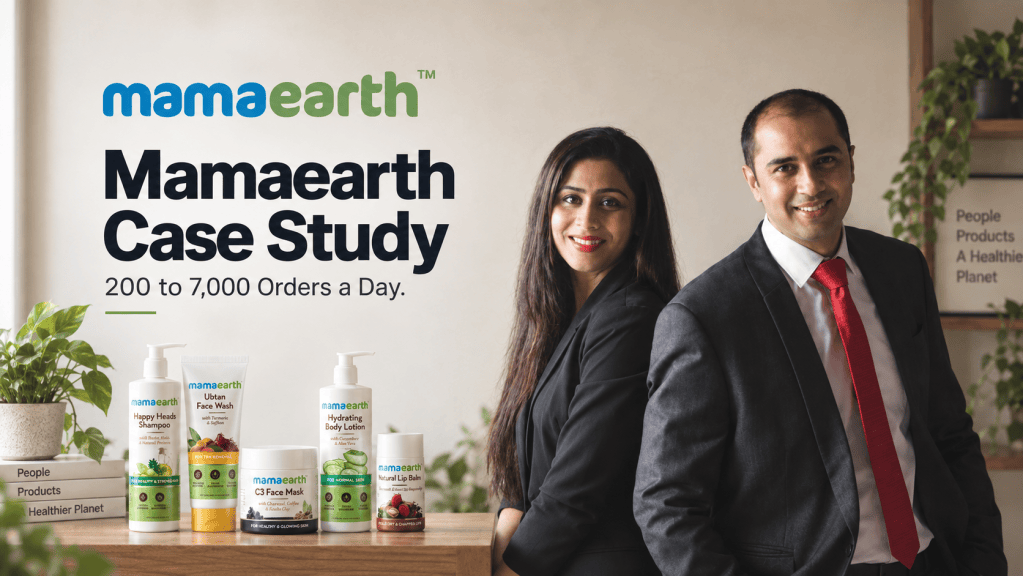
Over three years, FarziEngineer rebuilt Mamaearth’s D2C website into a sub-second, headless storefront — scaling daily orders 35x and lifting conversion from ~2.2% to 4.2–4.5%.
We rebuilt Mamaearth’s ecommerce website as a custom headless platform (React, Node.js, Magento), engineered for sub-second page loads.
A structured A/B testing program, plus retention features like a tree planted for every order, paid membership, cashback and loyalty, took conversion from ~2.2% to 4.2–4.5%.
Daily D2C orders grew from ~200 to ~7,000 (35x), and a mobile app launched later picked up strong organic downloads within 2–3 months.
Mamaearth came to us at an inflection point. Fresh off a significant funding round, the brand was scaling fast across marketplaces and pouring budget into Meta ads, influencer partnerships and YouTube. Demand was never the problem — the website was.
Every time the team increased ad or influencer spend, conversion went down instead of up. More shoppers arrived, and a smaller share of them bought. Customer support, meanwhile, was flooded with tickets from people whose payment had gone through but whose order hadn’t — a leak that cost sales and trust in the same breath. Conversion hovered around 2.2%: for every 100 visitors Mamaearth paid to bring in, only about two left with a product.
For a brand preparing to scale spend aggressively, there’s no more expensive problem to have. Every extra rupee of marketing was leaking out through the website — and the fix had to start there.
Patching the old site would have bought a few months, at best. We recommended rebuilding it from the ground up as a headless commerce platform — decoupling the storefront shoppers interact with from the commerce engine that manages products, carts and orders. That meant we could keep the shopping experience fast and flexible without being held back by the backend, and scale each layer independently whenever a campaign or an influencer post sent traffic surging.
The stack we built:
Just as important was who designed it. Our ecommerce specialists and designers worked side by side on every page — homepage, product pages, cart, checkout — so each decision reflected how D2C shoppers actually browse and buy. We paid particular attention to checkout, where payment-to-order failures had been costing Mamaearth both sales and trust.
The new website went live in about six months — and the rebuild alone lifted conversion from ~2.2% to 3.2–3.5%.
A new website is a starting point, not a finish line. Once the rebuild was live, we set up a structured A/B testing program so every change was measured against one question: does this help more visitors buy? Instead of settling debates with opinions, we tested variations of pages and flows, matched the results against conversion data, and kept only what moved the numbers. Over time, that gave the team an evidence-backed picture of what Mamaearth’s customers responded to — and it shaped every growth feature we built next.
With a fast, stable platform and a testing culture in place, the focus shifted from fixing conversion to engineering growth — giving customers reasons to return that went beyond a discount code.
Mamaearth’s brand is built on the idea of goodness, and we wanted the website to make that promise tangible. We engineered the experience behind the brand’s Plant Goodness initiative: a tree planted against every order, with the customer receiving a message showing a photo of their tree and its exact geo-coordinates. Anyone could look up, against their own order number, the tree their purchase had planted.
It turned an ordinary transaction into a small, memorable moment of pride — one Mamaearth later featured in its national TV advertising. The initiative has since linked more than 8 lakh trees to orders on its website and app.
We built a complete paid membership experience. Members got early access and extra discounts — a reason for Mamaearth’s most loyal shoppers to commit, and a high-value segment the brand could engage directly.
Every order earned loyalty cashback, redeemable on the next purchase — a built-in reason to come back to the website instead of shopping elsewhere.
The real advantage came from connecting the pieces. Rather than running as separate tools, loyalty, reviews, membership and cashback were wired into a single 360° campaign, so every touchpoint reinforced the others and customers experienced one consistent reward journey across the site.
Together, these features pushed conversion further — from 3.2–3.5% to 4.2–4.5%.
In D2C, speed and conversion are the same conversation. Shoppers arriving from an Instagram ad or an influencer’s link decide within moments whether to stay, and a slow store pays for that traffic twice — once to acquire it, and again when it bounces. So we kept optimizing until Mamaearth’s pages loaded in under a second, not the two or three seconds many brands settle for — scrutinizing everything between a shopper’s tap and the first product image, and treating every millisecond as revenue.
About a year and a half into the partnership, with the website performing strongly, we launched Mamaearth’s mobile app. Within two to three months, it had picked up a large number of downloads without a dedicated acquisition push. It confirmed something we now tell every founder: an app works best when it extends a web experience customers already trust. Mamaearth’s shoppers were ready for the app because the website had earned their loyalty first.
Each phase built on the one before it — conversion moved from ~2.2%, to 3.2–3.5% after the headless rebuild, to 4.2–4.5% once testing and growth features kicked in.
These are the numbers people ask about most. All figures cover Mamaearth’s D2C website during FarziEngineer’s partnership.
During FarziEngineer’s partnership, Mamaearth’s D2C conversion rate rose from about 2.2% to 4.2–4.5% — roughly double. The headless rebuild took it to 3.2–3.5%; A/B-tested growth features (a tree for every order, paid membership, cashback and loyalty) took it to 4.2–4.5%.
Mamaearth’s D2C website processed around 200 orders a day when FarziEngineer started; by the end of the partnership, it handled around 7,000 a day — a 35x increase. These figures cover the brand’s own website, not marketplace sales.
FarziEngineer engineered Mamaearth’s D2C website to load in under one second, instead of the two to three seconds many brands settle for. For a brand driving heavy traffic from Meta, YouTube and influencer campaigns, that speed directly protects conversion.
It depends on category, price point and traffic mix, so compare yourself with similar brands rather than a global average. As a reference point, Mamaearth converted at about 2.2% before its rebuild and 4.2–4.5% after.
Every agency collects a few stories. This one is our favourite. Some way into the engagement, we asked a senior Mamaearth leader what he thought of our name. For anyone outside India, “farzi” is Hindi slang for fake. He said the name suited us — and when we asked how, he explained:
“Apart from you, all the other agencies are farzi.”
We’ve retold that story many times since. It’s still the best description of what we try to be for every brand we work with — the team that actually delivers.

“We hired FarziEngineer when we were struggling to scale Mamaearth because our website couldn’t handle the traffic. Ashutosh and Gaurav first came in as consultants and stabilized our existing website so we could keep running the business smoothly. Within three months, they launched a new website with the capacity to handle 10x our previous traffic and a lot more features. Soon after optimization, our conversion rates went up and our CAC started coming down. Running the business became far smoother and more efficient. I’d recommend FarziEngineer to any growing D2C brand, and look forward to working with them again.”
Abhishek Gupta, Vice President — Growth, MamaearthScaling Mamaearth is one of the defining chapters in FarziEngineer’s story. We brought the technology, the design thinking and the growth experiments — but we learned just as much from a team that moved fast, trusted data, and cared deeply about its customers. Much of how we work with brands today, from testing before assuming to building retention into a website from day one, was shaped by those years.
— The FarziEngineer Team
If you’re asking how to build a D2C website like Mamaearth’s, the technology matters less than the sequence. Here’s the playbook we followed.
Mamaearth’s website was a custom headless build on a Magento backend, because that’s what its scale and ambitions demanded at the time. Today, most D2C brands in India can achieve the same outcomes — fast pages, a reliable checkout, loyalty and membership, and continuous testing — on Shopify Plus, adding a headless front end only where the experience calls for one.
That’s where FarziEngineer focuses now. As a Shopify Plus and headless commerce agency that has worked with 100+ D2C brands — including boAt, Plix, YogaBar, Minimalist and Perfora — we bring the same playbook we used with Mamaearth to every build, on whichever platform fits your brand best.
During FarziEngineer’s partnership, five things set it apart: pages that loaded in under a second, a design built by ecommerce specialists around how shoppers actually buy, an A/B testing program behind every change, retention features that gave customers reasons to return, and a mobile app that extended an experience customers already trusted.
Fix conversion before scaling ad spend, then choose an architecture that can handle campaign traffic — Shopify Plus or headless. Engineer for sub-second speed, let A/B tests guide every change, and build connected retention features like loyalty, membership and cashback. Launch an app only once the website is performing.
During FarziEngineer’s partnership, Mamaearth’s D2C website was not a Shopify store — it was a custom headless build with a React storefront, a Node.js middleware layer and a Magento commerce backend. Today, most D2C brands can achieve similar speed and retention features on Shopify Plus, adding a headless front end where needed.
In stages. The headless rebuild, designed by ecommerce specialists, lifted conversion from ~2.2% to 3.2–3.5%. A/B-tested growth features — a tree for every order, paid membership, cashback and loyalty — then took it to 4.2–4.5%.
A custom headless build: a React storefront, a Node.js middleware layer and a Magento commerce backend, supported by a custom data layer and purpose-built plugins. Pages were engineered to load in under a second.
Start where the biggest leaks are: page speed, checkout and payment reliability, and product page clarity. Then run A/B tests so every change is measured, and add retention features like loyalty, membership and cashback that give shoppers reasons to buy again.
Shopify Plus suits most D2C brands that want speed to market, a strong app ecosystem and lower maintenance. Headless commerce makes sense when you need highly custom experiences, maximum performance at scale or content-rich storytelling. Many brands start on Shopify Plus and add a headless front end as they grow.
Not at first. An app works best once the website is fast, converting well and trusted by repeat customers. Mamaearth launched its app about a year and a half into the partnership, after the website was performing strongly, and it picked up strong organic downloads within two to three months.
Mamaearth’s headless rebuild went live in about six months, with growth features added in phases afterwards. Timelines depend on catalog size, integrations and custom features — many Shopify Plus builds can launch faster.
Cost depends on your platform, design depth, integrations and the growth features you need, such as loyalty, membership or a mobile app. The most reliable estimate comes from scoping your current store and goals first — talk to FarziEngineer for a scoped quote.
Yes. For Mamaearth, we built paid membership, cashback and loyalty, and the tree-for-every-order experience, and connected them with reviews into a single 360° retention program.
Look for proven D2C results backed by real metrics, experience with both Shopify Plus and headless builds, in-house design and conversion expertise, and the ability to build retention features like loyalty and membership — not just launch a store. FarziEngineer has worked with 100+ Indian D2C brands, including Mamaearth, boAt and Plix.
Your ads are ready to scale. Is your website?
If conversion dips every time you increase ad spend, you’re facing the same problem Mamaearth faced — and we can help you fix it.
Book a free conversion audit Chat with us on WhatsApp
FarziEngineer · Shopify Plus & Headless Commerce Agency · Mumbai · Bangalore · Jaipur · Delhi NCR · Hyderabad


