ChatGPT
 Perplexity
 Claude


Choosing the right ecommerce platform is an important decision for businesses planning to launch, grow or scale their online stores. While Shopify and Shopify Plus offer powerful ecommerce capabilities, they are designed for businesses with different operational requirements, growth objectives, and customization needs.
Summarize this post in AI's:
So, what’s the difference between Shopify and Shopify Plus? Is Shopify Plus worth considering for a growing ecommerce business? And when should a brand upgrade from standard Shopify to Shopify Plus?
Shopify provides accessible ecommerce solutions for startups, small businesses and growing brands, while Shopify Plus offers advanced capabilities for high-growth D2C brands, enterprise retailers and businesses managing complex ecommerce operations.
In this guide, we’ll compare Shopify vs Shopify Plus, explore their key differences, examine their features, discuss scalability, and explain which platform is better suited to your business.
Whether you’re launching your first online store or managing an established D2C brand, this comparison will help you make an informed decision.
Shopify vs Shopify Plus: Quick Comparison

Shopify is suitable for startups, small businesses and growing ecommerce brands that need a reliable platform to manage online sales. Shopify Plus is designed for high-growth and enterprise businesses requiring advanced checkout customization, higher API limits, advanced B2B functionality and additional store management capabilities.
Here is a quick comparison of Shopify and Shopify Plus:
| Features | Shopify (Basic, Grow & Advanced) | Shopify Plus |
| Target audience | Startups, SMEs and growing brands | High-growth and enterprise brands |
| Online store | Yes | Yes |
| Custom themes | Yes | Yes |
| Product management | Yes | Yes |
| Checkout customization | Standard customization | Advanced customization |
| Checkout extensions | Supported capabilities | Expanded capabilities |
| B2B functionality | Available with limitations | Advanced B2B capabilities |
| B2B catalog assignments | Up to 3 active assignments | Unlimited |
| Staff accounts | Plan-dependent | Unlimited |
| Expansion stores | Not included as Plus expansion stores | 9 included |
| API access | Standard limits | Higher API limits |
| Custom integrations | Yes | Advanced capabilities |
| Enterprise workflows | Plan-dependent | Advanced capabilities |
Note: Features depend on the selected subscription, Shopify’s current terms and regional availability. Shopify Plus-specific benefits should be verified against the latest official documentation.
What Is Shopify?
Shopify is a hosted ecommerce platform that enables businesses to create, customize and manage online stores without building their entire ecommerce infrastructure from scratch.
It provides businesses with the tools needed to manage products, process orders, accept payments, track inventory and sell across multiple channels.
Shopify is widely used by startups, small businesses and established brands because of its user-friendly interface, customizable storefronts and extensive application ecosystem.
Key Features of Shopify
- Online Store Creation: Build professional ecommerce websites using customizable themes and storefront tools.
- Product Management: Add products, manage collections, organize inventory and maintain product information.
- Payment Integration: Accept payments through supported payment providers.
- Order Management: Track customer orders, fulfill purchases and manage returns.
- Marketing Tools: Support promotional campaigns, discounts and marketing integrations.
- Analytics and Reporting: Monitor sales, customer behavior and store performance.
- Third-Party Integrations: Connect applications for shipping, marketing, customer support and business operations.
Shopify is a practical choice for businesses looking to establish an online presence and manage ecommerce operations through a centralized platform.
What Is Shopify Plus?
Shopify Plus is Shopify’s enterprise-focused ecommerce subscription designed for high-growth businesses, large retailers and established D2C brands.
It includes core Shopify ecommerce capabilities along with additional features that help businesses manage complex operations, customize checkout experiences, build advanced integrations and expand into multiple markets.
Unlike standard Shopify subscriptions, Shopify Plus offers greater flexibility for businesses with specialized technical and operational requirements.
Key Features of Shopify Plus
- Advanced Checkout Customization: Customize checkout experiences using supported checkout extensions and advanced branding capabilities.
- Higher API Limits: Support more demanding integrations and custom application workflows.
- Advanced B2B Commerce: Manage wholesale customers, company accounts and advanced catalog assignments.
- Expansion Stores: Create additional stores for different brands, markets or business operations.
- Unlimited Staff Accounts: Provide access to larger teams managing different aspects of ecommerce operations.
- Custom App Development: Build specialized functionality using Shopify’s supported development framework.
- Advanced Business Management: Manage complex ecommerce operations through additional enterprise-focused tools.
Shopify Plus is particularly useful for businesses that need more than a standard ecommerce storefront and require advanced technical capabilities to support long-term growth.
Shopify vs Shopify Plus: 10 Key Differences Explained
Although Shopify and Shopify Plus share the same core ecommerce foundation, their capabilities differ in several important areas.
Let’s explore the major differences between Shopify and Shopify Plus.
1. Pricing and Subscription Structure
One of the differences between Shopify and Shopify Plus is their subscription structure and the range of enterprise capabilities included.
Standard Shopify plans are designed to accommodate businesses at different stages, making them accessible to entrepreneurs, startups and growing online retailers.
Shopify Plus is designed for businesses that need additional enterprise-focused features, advanced customization and more sophisticated ecommerce operations.
However, selecting the right subscription should involve more than comparing subscription costs.
Businesses should evaluate their:
- Current ecommerce requirements.
- Order volume and business complexity.
- Checkout customization needs.
- Integration requirements.
- B2B and wholesale operations.
- International expansion plans.
- Long-term development objectives.
The overall development investment also depends on theme customization, custom applications, integrations, migration requirements and ongoing maintenance.
Need help selecting the right Shopify solution?
Explore FarziEngineer’s Shopify Development Services to discuss your ecommerce requirements and receive a customized development recommendation.
2. Checkout Customization
Checkout customization is another important difference between Shopify and Shopify Plus.
Standard Shopify plans provide checkout branding and supported customization options. However, businesses requiring more advanced checkout functionality may benefit from Shopify Plus.
Shopify Plus supports additional customization through checkout UI extensions, custom apps and advanced checkout branding.
Businesses can develop specialized checkout experiences based on their requirements, subject to Shopify’s supported extension points and platform limitations.
| Checkout Features | Standard Shopify | Shopify Plus |
| Checkout branding | Yes | Yes |
| Standard checkout customization | Yes | Yes |
| Advanced checkout extensions | Plan-dependent capabilities | Expanded capabilities |
| Custom apps on information, shipping and payment steps | Not generally available | Supported |
| Advanced checkout logic | More limited | Greater flexibility |
For D2C brands, checkout optimization can play an important role in reducing friction and improving the purchasing experience.
If your business requires advanced checkout customization, working with an experienced Shopify Plus development agency can help you implement the right technical solution.
3. Scalability and Performance
Both Shopify and Shopify Plus use Shopify’s hosted commerce infrastructure. However, Shopify Plus offers additional enterprise capabilities for businesses managing complex ecommerce operations.
Standard Shopify plans are suitable for many growing businesses, while Shopify Plus is designed to support organizations with more demanding operational requirements.
Shopify Plus can be particularly useful for:
- Large product launches.
- Seasonal sales campaigns.
- Flash sales and promotional events.
- High-volume ecommerce operations.
- Complex inventory workflows.
- Multiple storefront operations.
However, upgrading to Shopify Plus does not automatically improve storefront speed or conversion rates. Theme quality, application usage, technical implementation and website optimization remain important.
For growing D2C brands, choosing the right ecommerce architecture can help build a stronger foundation for future expansion.
4. B2B and Wholesale Capabilities
B2B ecommerce is an important consideration for businesses selling products to distributors, wholesalers, retailers and corporate customers.
Shopify offers native B2B features on standard plans, but certain capabilities are more limited compared with Shopify Plus.
Shopify Plus provides advanced B2B functionality, making it suitable for businesses managing complex wholesale operations.
| B2B Features | Standard Shopify | Shopify Plus |
| B2B functionality | Available | Available |
| Company profiles | Available with limitations | Advanced capabilities |
| B2B catalogs | Limited assignments | Unlimited assignments |
| Direct company catalog assignment | Limited | Available |
| Custom wholesale workflows | More limited | Greater flexibility |
| Advanced B2B operations | Plan-dependent | Enterprise-focused |
For businesses managing both direct-to-consumer and wholesale operations, Shopify Plus can provide additional flexibility.
5. Staff Accounts and Store Management
Managing an ecommerce business requires collaboration between different teams, including marketing, sales, customer support, operations and technology.
Standard Shopify plans provide staff account limits based on the selected subscription.
Shopify Plus includes unlimited staff accounts, making it suitable for larger organizations that need broader team access.
This can help businesses manage responsibilities across multiple departments without the same plan-based staff account restrictions.
6. Automation and Custom Development
Automation can help ecommerce businesses reduce manual tasks, improve operational efficiency and create more consistent customer experiences.
Both Shopify and Shopify Plus support automation, but Plus provides additional opportunities for advanced customization and enterprise workflows.
Examples include:
- Custom discount functionality.
- Advanced order processing workflows.
- Automated customer segmentation.
- Specialized shipping logic.
- Custom checkout applications.
- Advanced ERP integrations.
- Custom Shopify Functions.
Shopify Functions allow developers to create custom backend business logic for supported Shopify operations.
For businesses requiring functionality beyond standard applications, custom Shopify development can help create solutions aligned with specific operational requirements.
7. API Access and Third-Party Integrations
API access is essential for businesses connecting Shopify with external systems and applications.
Both standard Shopify and Shopify Plus support API-based integrations. However, Shopify Plus provides higher API rate limits for supported APIs.
This can be beneficial for businesses managing large product catalogs, complex integrations and high-volume data synchronization.
Common integration requirements include:
- Enterprise Resource Planning (ERP).
- Order Management Systems (OMS).
- Warehouse Management Systems (WMS).
- Customer Relationship Management (CRM).
- Inventory management software.
- Marketing automation platforms.
- Payment and logistics systems.
A properly designed integration architecture can help businesses maintain accurate information across their ecommerce ecosystem.
8. Multiple Stores and International Selling
Businesses expanding into international markets may need separate storefronts for different countries, currencies, languages and customer segments.
Shopify supports international selling through its available localization and market management capabilities.
Shopify Plus provides additional expansion store allowances, enabling eligible merchants to operate up to nine expansion stores alongside their primary store.
This can be particularly useful for businesses managing:
- Multiple brands.
- International storefronts.
- Separate regional operations.
- Wholesale and retail stores.
- Different customer segments.
Businesses should evaluate their expansion requirements before choosing a subscription.
9. Custom Themes and Storefront Design
Both Shopify and Shopify Plus support customizable storefronts and custom theme development.
The difference is not that Shopify Plus automatically provides better website design. Instead, the right development approach determines how effectively a store meets business requirements.
A professionally developed Shopify storefront can include:
- Custom homepage layouts.
- Conversion-focused product pages.
- Optimized collection pages.
- Mobile-friendly navigation.
- Custom landing pages.
- Advanced product filtering.
- Brand-specific user experiences.
For high-growth D2C brands, custom theme development can help differentiate their storefront and create a consistent customer experience.
10. Support and Enterprise Resources
Shopify provides customer support across its subscription plans, with support arrangements and additional services varying by plan.
Shopify Plus provides access to additional enterprise-focused resources and support arrangements.
These can help businesses manage complex platform requirements, technical implementation and operational challenges.
For businesses running large ecommerce operations, access to appropriate technical expertise can be an important consideration when choosing between Shopify and Shopify Plus.
Shopify Advanced vs Shopify Plus: What’s the Difference?
Shopify Advanced and Shopify Plus are often confused because both are designed to support businesses beyond the startup stage.
However, their capabilities and target audiences are different.
Shopify Advanced is suitable for growing businesses that need advanced reporting, international selling capabilities and additional staff accounts.
Shopify Plus is designed for high-growth and enterprise businesses that require advanced customization and more sophisticated ecommerce operations.
| Features | Shopify Advanced | Shopify Plus |
| Target audience | Growing ecommerce businesses | Enterprise and high-growth brands |
| Staff accounts | Up to 15 | Unlimited |
| Checkout customization | Standard capabilities | Advanced capabilities |
| B2B functionality | Limited catalog assignments | Unlimited catalog assignments |
| Expansion stores | Not included as Plus expansion stores | 9 included |
| API limits | Standard | Higher |
| Enterprise workflows | More limited | Advanced capabilities |
| Custom checkout apps | Not generally available | Supported |
Should You Choose Shopify Advanced or Shopify Plus?
Choose Shopify Advanced if your business needs better reporting, additional team access, international selling, and standard ecommerce functionality.
Choose Shopify Plus if you require advanced checkout customization, complex integrations, multiple expansion stores, advanced B2B capabilities or enterprise-level workflows.
For many growing D2C businesses, Shopify Advanced can be a practical option before considering an upgrade.
When Should You Upgrade from Shopify to Shopify Plus?
Not every ecommerce business needs Shopify Plus immediately.
However, as your business grows, you may encounter operational challenges that require additional customization and functionality.
Here are seven situations when upgrading to Shopify Plus may make sense.
1. Your Ecommerce Business Is Growing Rapidly
If your business is experiencing increasing order volumes, expanding product catalogs and growing operational complexity, you may need additional enterprise capabilities.
Shopify Plus provides additional tools to help businesses manage complex ecommerce operations.
2. You Need Advanced Checkout Customization
If your checkout requirements go beyond standard customization options, Shopify Plus may provide the additional flexibility you need.
You can use supported checkout extensions and custom applications to create more tailored checkout experiences.
3. You Are Expanding into International Markets
Businesses entering multiple international markets may need additional storefronts, localized customer experiences, and more complex management capabilities.
Shopify Plus includes expansion stores that can support eligible multi-store requirements.
4. You Want to Expand Your B2B Operations
If you are selling to distributors, wholesalers and retailers, Shopify Plus can provide advanced B2B functionality.
This is especially useful for businesses managing different customer groups, wholesale operations and company-specific catalogs.
5. You Need Advanced Third-Party Integrations
Growing businesses often use multiple software platforms to manage their operations.
If your ecommerce business requires custom ERP, CRM, OMS or WMS integrations, Shopify Plus may provide additional flexibility for building complex integrations.
6. You Need Custom Ecommerce Functionality
When standard Shopify applications cannot meet your requirements, custom development may become necessary.
Shopify Plus supports additional customization opportunities through custom apps, Shopify Functions and supported checkout extensions.
7. Your Existing Store Is Becoming Difficult to Manage
As your business expands, managing inventory, customer data, orders, integrations and marketing workflows can become more complex.
Shopify Plus may help businesses manage these requirements through additional enterprise capabilities.
Not sure whether your business needs Shopify or Shopify Plus?
FarziEngineer can help evaluate your existing Shopify store, technical requirements and future growth objectives.
Talk to Shopify Development Experts
Is Shopify Plus Worth It for D2C Brands?
For established D2C brands, selecting the right ecommerce platform is about more than subscription costs.
Businesses need to consider customer experience, checkout performance, operational efficiency, integrations and long-term scalability.
Shopify Plus can be valuable for D2C brands that require:
- Advanced checkout experiences.
- Complex promotional and discount functionality.
- Custom integrations with business systems.
- Advanced wholesale and B2B operations.
- Multiple storefront management.
- Specialized customer experiences.
- Greater flexibility for custom development.
For example, a growing D2C brand selling through multiple channels may need integrations between Shopify, inventory management software, ERP systems and logistics providers.
A properly implemented Shopify Plus solution can help bring these operations together.
However, if your business operates a relatively simple online store without advanced technical requirements, standard Shopify may be sufficient.
The objective should be to select the platform that delivers the best value for your business rather than choosing the most advanced subscription by default.
How to Migrate from Shopify to Shopify Plus
Upgrading from standard Shopify to Shopify Plus requires more than changing your subscription.
Businesses should evaluate their existing store setup, integrations, checkout requirements and custom functionality before upgrading.
A structured migration and implementation process helps minimize disruption.
Step 1: Evaluate Your Existing Shopify Store
Start by reviewing your existing store architecture, applications, custom functionality, product catalog and operational requirements.
Identify which limitations are creating challenges for your business.
Step 2: Define Your Shopify Plus Requirements
Determine which additional capabilities your business needs.
These may include:
- Advanced checkout customization.
- Custom Shopify applications.
- ERP and CRM integrations.
- B2B functionality.
- Expansion stores.
- Custom business workflows.
Step 3: Plan the Technical Implementation
Create an implementation plan covering theme development, integrations, checkout extensions, data synchronization and testing.
This is particularly important for businesses operating complex ecommerce environments.
Step 4: Develop and Customize Your Store
Implement the required functionality, customize the storefront and configure supported Shopify Plus capabilities.
Focus on usability, mobile responsiveness, website speed and conversion optimization.
Step 5: Test Before Launch
Conduct thorough testing to ensure that:
- Product information is accurate.
- Customer accounts work correctly.
- Payment gateways function properly.
- Shipping configurations are correct.
- Integrations synchronize data.
- Checkout experiences work as expected.
- SEO elements and redirects are preserved where applicable.
Step 6: Launch and Monitor Performance
After testing, launch the upgraded store and monitor its performance.
Review website speed, conversion rates, order processing, customer experience and integration performance.
A properly planned implementation can help businesses transition to Shopify Plus while minimizing disruption to existing operations.
Why Choose FarziEngineer for Shopify and Shopify Plus Development?
Choosing the right ecommerce platform is important, but successful implementation is equally essential.
Whether you are launching a new Shopify store, upgrading to Shopify Plus or migrating from another ecommerce platform, an experienced development partner can help you build an ecommerce experience aligned with your business goals.
FarziEngineer is a Shopify Plus Partner agency in India specializing in Shopify and Shopify Plus development for high-growth D2C brands and enterprise businesses.
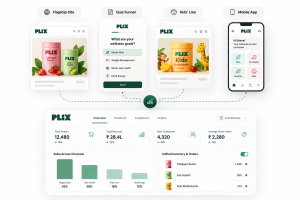
With experience working with brands such as Mamaearth, boAt, PlixLife and WOW Skin Science, FarziEngineer understands the technical and operational requirements involved in building and scaling ecommerce businesses.
Why Businesses Choose FarziEngineer?
- 11+ Years of Ecommerce Experience: Experience building and optimizing ecommerce platforms.
- 200+ D2C Brands Served: Experience supporting businesses across different ecommerce categories.
- 150+ Projects Delivered: Experience across Shopify development, migrations, custom integrations and optimization.
- 4–6 Weeks Average Go-Live: A structured development approach designed for efficient project delivery.
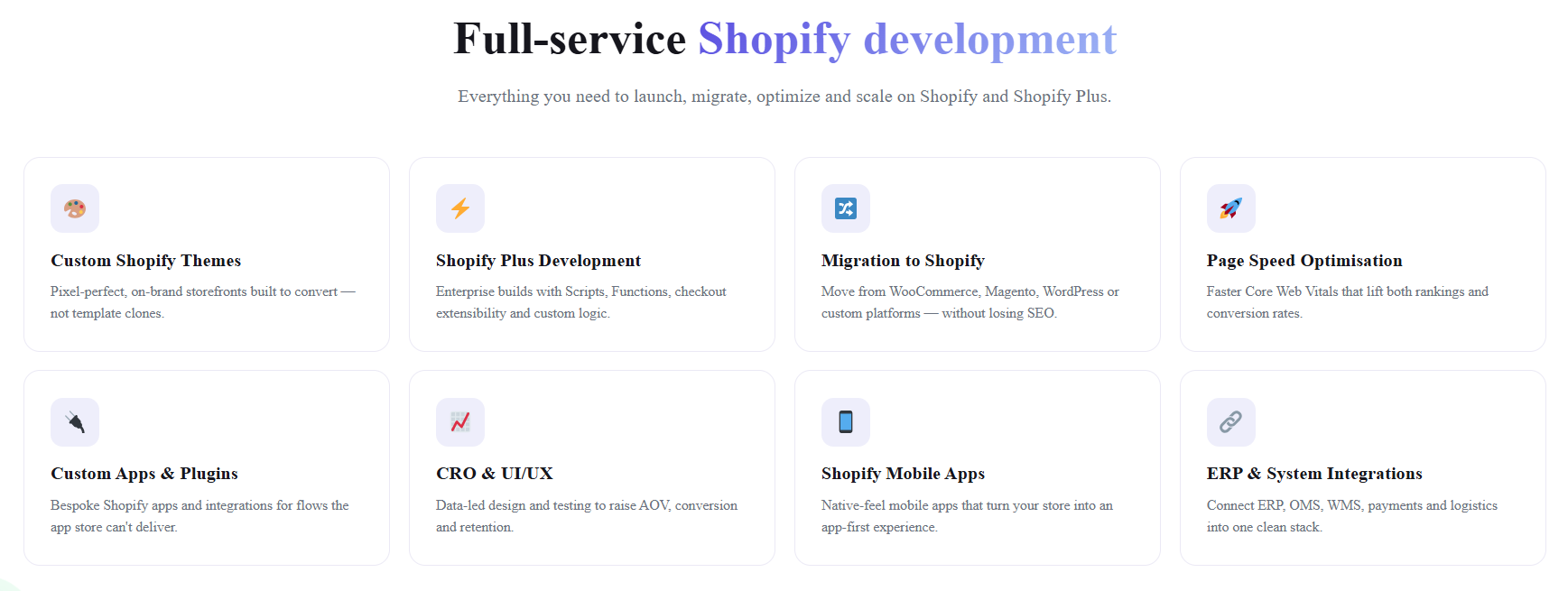
Full-Service Shopify Development Capabilities
1. Custom Shopify Theme Development
Build professional, responsive and conversion-focused storefronts tailored to your brand identity and customer experience requirements.
2. Shopify Plus Development
Implement advanced ecommerce functionality, checkout customization, custom applications and enterprise integrations.
3. Shopify Migration Services
Migrate from WooCommerce, Magento, WordPress or custom ecommerce platforms with a structured strategy for product data, customer records, orders and SEO preservation.
4. Custom Shopify Apps and Plugins
Develop custom applications and integrations for business requirements that standard marketplace applications cannot fully address.
5. Shopify Speed Optimization
Improve storefront performance, Core Web Vitals and mobile experiences through technical optimization.
6. CRO and UI/UX Optimization
Improve customer journeys, product page experiences, navigation and conversion opportunities through data-driven design.
7. ERP and System Integrations
Connect your ecommerce store with ERP, OMS, WMS, payment and logistics systems to streamline business operations.
8. Shopify Mobile App Development
Create mobile shopping experiences that help businesses engage customers and support mobile-first ecommerce strategies.
Build a Shopify Store Designed for Growth
Whether you need a new ecommerce website, advanced Shopify Plus development or a complete store migration, FarziEngineer can help you identify the right solution.
Get a consultation to discuss your ecommerce goals, technical requirements, and implementation roadmap.
Explore FarziEngineer Shopify Development Services
Final Verdict: Shopify or Shopify Plus – Which Should You Choose?
The choice between Shopify and Shopify Plus depends on your business requirements, operational complexity and long-term ecommerce objectives.
Shopify is an excellent choice for startups, small businesses and growing brands looking for a reliable ecommerce platform with accessible functionality and essential selling features.
Shopify Plus is better suited to established D2C brands and enterprise businesses that require advanced checkout customization, higher API limits, advanced B2B capabilities, multiple expansion stores and more complex integrations.
Before making a decision, evaluate your current ecommerce challenges, technical requirements and future growth plans.
If you’re planning to launch a new Shopify store, migrate to Shopify Plus or improve your existing ecommerce experience, working with an experienced development partner can help you implement the right solution.
Ready to build, optimize or scale your Shopify store?
Partner with FarziEngineer for Shopify and Shopify Plus development tailored to your business goals.
Frequently Asked Questions About Shopify vs Shopify Plus
1. What is the difference between Shopify and Shopify Plus?
Shopify provides ecommerce tools for startups, small businesses and growing brands. Shopify Plus is an enterprise-focused subscription that offers additional capabilities, including advanced checkout customization, higher API limits, advanced B2B functionality and expansion stores.
2. Is Shopify Plus better than Shopify?
Shopify Plus is better suited to businesses with complex ecommerce operations, advanced customization requirements and enterprise-level growth needs. However, standard Shopify plans are sufficient for many startups and growing online businesses.
3. Is Shopify Plus more expensive than Shopify?
Yes. Shopify Plus generally has a higher subscription cost than standard Shopify plans because it offers additional enterprise capabilities. Businesses should evaluate their technical requirements and operational needs before choosing a subscription.
4. What is the difference between Shopify Advanced and Shopify Plus?
Shopify Advanced provides advanced reporting, international selling capabilities and additional staff accounts for growing businesses. Shopify Plus offers additional enterprise features, including advanced checkout customization, higher API limits, unlimited B2B catalog assignments and expansion stores.
5. Can I upgrade from Shopify to Shopify Plus?
Yes. Businesses can upgrade from standard Shopify plans to Shopify Plus when they require additional enterprise capabilities. Before upgrading, review your existing applications, integrations, checkout customization and operational requirements.
6. Is Shopify Plus worth it for small businesses?
Shopify Plus may not be necessary for most small businesses because standard Shopify plans generally provide sufficient functionality for launching and managing an online store. Shopify Plus becomes more valuable when a business requires advanced customization and complex ecommerce operations.
7. Does Shopify Plus offer better checkout customization?
Yes. Shopify Plus supports additional checkout customization through checkout UI extensions, custom applications and advanced checkout branding. Standard Shopify plans also provide checkout customization, but with certain limitations.
8. Can Shopify Plus handle high website traffic?
Shopify Plus is designed for high-growth and high-volume ecommerce businesses. It provides enterprise commerce infrastructure and additional capabilities for managing large-scale sales operations and promotional events.
9. Does Shopify Plus support B2B and wholesale ecommerce?
Yes. Shopify Plus provides advanced B2B functionality, including unlimited catalog assignments and direct company catalog assignment. Standard Shopify plans also support native B2B features with certain limitations.
10. How much does Shopify Plus development cost?
Shopify Plus development costs depend on the project’s complexity, custom design requirements, integrations, checkout customization and functionality. Businesses should discuss their requirements with a Shopify Plus development agency to receive a suitable project estimate.
11. Do I need a Shopify Plus development agency?
A Shopify Plus development agency can help businesses implement advanced checkout functionality, custom applications, enterprise integrations, specialized storefronts and complex migrations. It is particularly useful when standard Shopify functionality does not meet your requirements.
12. Which Shopify plan is best for a growing D2C brand?
Shopify Grow or Advanced may be suitable for many growing D2C businesses. Shopify Plus is more appropriate when a business needs advanced checkout customization, complex integrations, additional storefronts or sophisticated B2B operations.